
All Articles: Health Sciences
Raven works in the laboratory of Prof. Gunda Georg, a worldwide leader in male contraception.

Translational Experience in Drug Discovery and Development, a course offering for first- and second-year medicinal chemistry graduate students in the College of Pharmacy, replicates “real-world” therapeutic development.

Alumna Amanda Blom’s path to occupational therapy was a natural continuation of the care she was already providing.

Joe’s talk focused on research funded by Clinical and Translational Science Institute (CTSI) T32 training program.
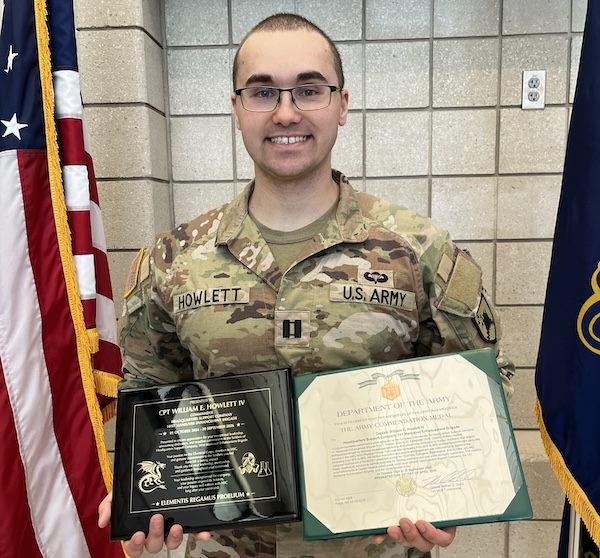
Captain Howlett is a PhD Student in Prof. Elizabeth Ambrose’s laboratory in Medicinal Chemistry.

Dr. Raj Suryanarayanan, professor in the Department of Pharmaceutics, is the recipient of the 2026 Dale E. Wurster Research Award from the American Association of Pharmaceutical Scientists.

Medicinal Chemistry had a strong presence at this year’s Fall ACS meeting in Chicago.

At this year’s Minnesota State Fair, make sure to stop by the University of Minnesota's Research Building to take part in Dr. Corey McGee’s occupational therapy research looking at adult thumb function, adult shoulder blade motion and childhood grip strength.

Pam Jacobson, PharmD, FCCP, distinguished professor and director of the Institute of Personalized Medicine, has been named the interim head of the Department of Experimental and Clinical Pharmacology, effective July 6, 2026.

Robert Straka, PharmD, FCCP, head of the Department of Experimental and Clinical Pharmacology (ECP) and professor, shared his decision to step down from his administrative role as head of the department, effective July 6, 2026.