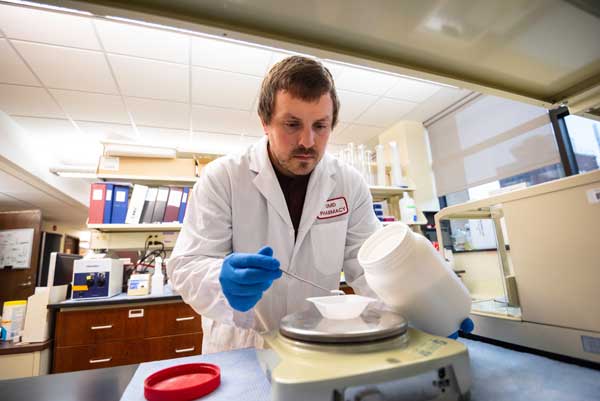
The College of Pharmacy offers degrees in the programs of pharmacy (PharmD, MS, PhD), occupational therapy (OTD), and medical laboratory sciences (BS, Certificate, MMLS, MS, and BLS).
The pharmacy program is offered on the Twin Cities and Duluth campuses. The occupational therapy program is offered on the Twin Cities and Rochester campuses. The medical laboratory sciences program is offered on the Twin Cities campus. Interactive technology is used to keep all campuses connected.
Vision
To lead innovative health education, research, and practice that leverages our programs in Pharmaceutical Sciences, Pharmacy Practice, Occupational Therapy, and Medical Laboratory Sciences to deliver evidence-based, interprofessional, person-centered care that significantly improves the health and well-being of individuals, communities, and populations within Minnesota and beyond.
Values
We, as a College of Pharmacy, act with integrity to live our values across all mission areas. With community as our cornerstone, we assume shared responsibility and accountability for creating a healthy and caring organization that contributes to society.
- Dignity
- Community
- Excellence
Strategic Plan
The College of Pharmacy is currently engaging in a year-long strategic planning process that aligns with Elevate Extraordinary 2030—the University's roadmap for the future. A new College of Pharmacy strategic plan is anticipated in early 2027.
Tackling Society’s Toughest Healthcare Problems
Since our founding in 1892, the University of Minnesota College of Pharmacy has improved the health of Minnesotans and people around the world through innovative education, pioneering research, and interdisciplinary practice development.
Our faculty, staff, students, alumni and partners work together to shape the field of pharmacy, accelerate innovations in education, drug discovery and development, healthcare, economics and policy, pharmaceutical care, medication management and progressive practice.
Research Activities
Our researchers are on the leading edge of finding ways to solve some of the world’s greatest problems in areas such as:
- Drug discovery and development
- Pharmaceutics and drug delivery
- Experimental and clinical pharmacology, including personalized medicine
- Neuroscience
- Cancer therapies and chemoprevention
- Geriatrics
- Pharmacy management and economics
- Healthcare outcomes