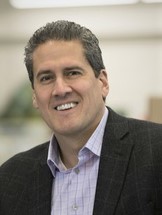
David A. Largaespada, PhD
Professor, Department of Pediatrics
Contact
Email
Office Phone
Office Address
2-188 Moos Tower
515 Delaware St. SE
Minneapolis, MN 55455
United States
Lab Address
2-191 Moos Tower
515 Delaware St. SE
Minneapolis, MN 55455
United States
Titles
Professor, Department of Pediatrics
Interim Deputy Director, Masonic Cancer Center
Director, Brain Tumor Program, Masonic Cancer Center
Adjunct Faculty, Department of Pharmaceutics
Faculty, Microbiology, Immunology and Cancer Biology PhD Graduate Program
Faculty, Graduate Program in Neuroscience
Preceptor, Medical Scientist Training Program (Combined MD/PhD Training Program)
Education
PhD in Cellular and Molecular Biology, University of Wisconsin-Madison
Fellowships
Post-Doctoral Fellowship, Leukemia & Lymphoma Society of America
Biography
David Largaespada, PhD, is a full professor in the Departments of Pediatrics and Genetics, Cell Biology, and Development and the Interim Deputy Director for the Masonic Cancer Center at University of Minnesota. He is an authority on mouse genetics, gene modification, and cancer genes. He received his BS in Genetics and Cell Biology from the University of Minnesota, Twin Cities in 1987 and his PhD in Molecular Biology with Dr. Rex Risser at the University of Wisconsin-Madison in 1992. He did a post-doctoral fellowship at the National Cancer Institute working with world-renowned geneticists Dr. Nancy Jenkins and Dr. Neal Copeland, where the Leukemia and Lymphoma Society of America awarded him a post-doctoral fellowship. He joined the faculty of the University of Minnesota in late 1996. Dr. Largaespada currently holds the Hedberg Family/Children’s Cancer Research Fund Chair in Brain Tumor Research. He was awarded the American Cancer Society Research Professor Award in 2013, the highest award given by the ACS.
Awards & Recognition
- Department Leadership Award, Department of Pediatrics, University of Minnesota
- Hedberg Family/Children’s Cancer Research Fund Endowed Chair in Brain Tumor Research
- American Cancer Society Research Professor Award
Research
Cancer functional genomics, insertional mutagenesis, transposons, Sleeping Beauty, CRISPR, Neurofibromatosis type 1 (NF1), pediatric cancer, brain tumors, sarcoma
Dr. Largaespada’s laboratory is focused on exploiting functional genomics and biotechnology to identify and target the genes and pathways that drive cancer. His group pioneered the use of the Sleeping Beauty (SB) transposon system for forward genetic screens in mouse models, enabling the discovery of cancer genes involved in sarcomas, hepatocellular carcinoma, gastrointestinal tract cancers, breast cancer, and especially NF1-associated tumors such as malignant peripheral nerve sheath tumors (MPNSTs). A central emphasis of this work is on identifying drivers of tumor initiation, metastasis, therapy resistance, and vulnerabilities that can be translated into therapeutic strategies.
The lab continues to advance SB-based mutagenesis, CRISPR/Cas9 genome editing, and single-cell technologies to identify cancer drivers and test rational drug combinations. This includes the creation of novel mouse models of NF1-deficient tumors and preclinical evaluation of emerging therapeutics, including MEK and HDAC inhibitors, as well as targeted drug combinations aimed at epigenetic vulnerabilities in PRC2-deficient MPNSTs and H3K27M gliomas. The group also integrates comparative genomic and proteomic analyses with functional screens to prioritize clinically relevant cancer genes.
Beyond gene discovery, Dr. Largaespada’s laboratory is committed to translational biotechnology development. The team has partnered in the creation of advanced nanocarriers for tumor-specific drug delivery and engineered viral and non-viral gene vectors to enhance therapeutic delivery. In parallel, the lab is pursuing adoptive cell therapy approaches, including CAR-T and CAR-NK engineering for solid tumors, and is applying SB mutagenesis to discover genetic modifications that improve the persistence and function of therapeutic immune cells in hostile tumor microenvironments.
Together, these efforts bridge cancer genetics, biotechnology innovation, and cell therapy development, with the goal of delivering next-generation therapies for NF1-associated tumors and other treatment-resistant cancers.
Publications
- Bhunia, M. M., C. M. Stehn, T. A. Jubenville, E. L. Novacek, A. T. Larsson, M. Madala, S. Suppiah, G. L. Velez-Reyes, K. B. Williams, M. Sokolowski, R. L. Williams, S. J. Finnerty, N. A. Temiz, A. Caride, A. V. Bhagwate, N. K. Nagaraj, J. H. Lee, T. Ordog, G. Zadeh and D. A. Largaespada (2024). "Multiomic analyses reveal new targets of polycomb repressor complex 2 in Schwann lineage cells and malignant peripheral nerve sheath tumors." Neurooncol Adv 6(1): vdae188.
- Patritti-Cram, J., E. P. Rahrmann, T. A. Rizvi, K. C. Scheffer, T. N. Phoenix, D. A. Largaespada and N. Ratner (2024). "NF1-dependent disruption of the blood-nerve-barrier is improved by blockade of P2RY14." iScience 27(7): 110294.
- Skeate, J. G., E. J. Pomeroy, N. J. Slipek, B. J. Jones, B. J. Wick, J. W. Chang, W. S. Lahr, E. M. Stelljes, X. Patrinostro, B. Barnes, T. Zarecki, J. B. Krueger, J. E. Bridge, G. M. Robbins, M. D. McCormick, J. R. Leerar, K. T. Wenzel, K. M. Hornberger, K. Walker, D. Smedley, D. A. Largaespada, N. Otto, B. R. Webber and B. S. Moriarity (2024). "Evolution of the clinical-stage hyperactive TcBuster transposase as a platform for robust non-viral production of adoptive cellular therapies." Mol Ther 32(6): 1817-1834.
- Nikrad, J. A., R. T. Galvin, M. M. Sheehy, E. L. Novacek, K. L. Jacobsen, S. Corbiere, P. J. Beckmann, T. A. Jubenville, M. Yamamoto and D. A. Largaespada (2024). "Conditionally replicative adenovirus as a therapy for malignant peripheral nerve sheath tumors." Mol Ther Oncol 32(2): 200783.
- Williams, K. B., A. T. Larsson, B. J. Keller, K. E. Chaney, R. L. Williams, M. M. Bhunia, G. M. Draper, T. A. Jubenville, W. A. Hudson, C. L. Moertel, N. Ratner and D. A. Largaespada (2024). "Pharmacogenomic synthetic lethal screens reveal hidden vulnerabilities and new therapeutic approaches for treatment of NF1-associated tumors." bioRxiv.
- Mehta, S., R. Wagner, K. T. Do, J. E. Johnson, F. Yu, T. Jubenville, K. Richards, S. Coleman, F. E. Popescu, A. I. Nesvizhskii, D. A. Largaespada, P. D. Jagtap and T. J. Griffin (2025). "A modular, immunopeptidogenomic (iPepGen) analysis pipeline for discovery, verification, and prioritization of cancer peptide neoantigen candidates." bioRxiv.
- Rathe, S. K., T. A. Marko, E. N. Edwards, P. H. Ridder, J. Varshney, K. B. Williams, J. E. Johnson, B. S. Moriarity and D. A. Largaespada (2025). "Techniques for Validating CRISPR Changes Using RNA-Sequencing Data." Genes (Basel) 16(4).
- Tiwari, A., U. Paithane, J. Friedlein, K. Tashiro, O. Saulnier, K. Barbosa, Q. Trinh, B. Hall, S. Saha, A. Soni, T. Nakashima, A. Bobkov, L. M. Fujimoto, R. Murad, S. Maurya, M. Saraswat, S. Sarmashghi, J. T. Lange, S. Wu, M. B. Masihi, S. Ghosh, G. Hemmati, O. Chapman, L. Hendrikse, B. James, J. Luebeck, T. Eisemann, T. Tzaridis, D. Rohila, R. Leary, J. Varshney, B. Konety, S. M. Dehm, Y. Kawakami, R. Beroukhim, D. A. Largaespada, L. Stein, L. Chavez, H. Suzuki, W. A. Weiss, J. Zhao, A. Deshpande, R. J. Wechsler-Reya, M. D. Taylor and A. Bagchi (2025). "Synergistic RAS-MAPK and AKT Activation in MYC-Driven Tumors via Adjacent PVT1 Rearrangements." bioRxiv.
- Fan, J. J., A. W. Erickson, J. Carrillo-Garcia, X. Wang, P. Skowron, X. Wang, X. Chen, G. Shan, W. Dou, S. Bahrampour, Y. Xiong, W. Dong, N. Abeysundara, M. A. Francisco, R. J. Pusong, W. Wang, M. Li, E. Ying, R. A. Suarez, H. Farooq, B. L. Holgado, X. Wu, C. Daniels, A. J. Dupuy, J. Cadinanos, A. Bradley, A. Bagchi, B. S. Moriarity, D. A. Largaespada, A. S. Morrissy, V. Ramaswamy, S. C. Mack, L. Garzia, P. B. Dirks, X. Li, S. Wanggou, S. Egan, Y. Sun, M. D. Taylor and X. Huang (2025). "A forward genetic screen identifies potassium channel essentiality in SHH medulloblastoma maintenance." Dev Cell 60(11): 1532-1549 e1537.
- Tseng, Y. Y., B. S. Moriarity, W. Gong, R. Akiyama, A. Tiwari, H. Kawakami, P. Ronning, B. Reuland, K. Guenther, T. C. Beadnell, J. Essig, G. M. Otto, M. G. O'Sullivan, D. A. Largaespada, K. L. Schwertfeger, Y. Marahrens, Y. Kawakami and A. Bagchi (2014). "PVT1 dependence in cancer with MYC copy-number increase." Nature 512(7512): 82-86.
- Seshagiri, S., E. W. Stawiski, S. Durinck, Z. Modrusan, E. E. Storm, C. B. Conboy, S. Chaudhuri, Y. Guan, V. Janakiraman, B. S. Jaiswal, J. Guillory, C. Ha, G. J. Dijkgraaf, J. Stinson, F. Gnad, M. A. Huntley, J. D. Degenhardt, P. M. Haverty, R. Bourgon, W. Wang, H. Koeppen, R. Gentleman, T. K. Starr, Z. Zhang, D. A. Largaespada, T. D. Wu and F. J. de Sauvage (2012). "Recurrent R-spondin fusions in colon cancer." Nature 488(7413): 660-664.
- Wu, X., P. A. Northcott, A. Dubuc, A. J. Dupuy, D. J. Shih, H. Witt, S. Croul, E. Bouffet, D. W. Fults, C. G. Eberhart, L. Garzia, T. Van Meter, D. Zagzag, N. Jabado, J. Schwartzentruber, J. Majewski, T. E. Scheetz, S. M. Pfister, A. Korshunov, X. N. Li, S. W. Scherer, Y. J. Cho, K. Akagi, T. J. MacDonald, J. Koster, M. G. McCabe, A. L. Sarver, V. P. Collins, W. A. Weiss, D. A. Largaespada, L. S. Collier and M. D. Taylor (2012). "Clonal selection drives genetic divergence of metastatic medulloblastoma." Nature 482(7386): 529-533.
- Collier, L. S., C. M. Carlson, S. Ravimohan, A. J. Dupuy and D. A. Largaespada (2005). "Cancer gene discovery in solid tumours using transposon-based somatic mutagenesis in the mouse." Nature 436(7048): 272-276.
- Dupuy, A. J., K. Akagi, D. A. Largaespada, N. G. Copeland and N. A. Jenkins (2005). "Mammalian mutagenesis using a highly mobile somatic Sleeping Beauty transposon system." Nature 436(7048): 221-226.
- Starr, T. K., R. Allaei, K. A. Silverstein, R. A. Staggs, A. L. Sarver, T. L. Bergemann, M. Gupta, M. G. O'Sullivan, I. Matise, A. J. Dupuy, L. S. Collier, S. Powers, A. L. Oberg, Y. W. Asmann, S. N. Thibodeau, L. Tessarollo, N. G. Copeland, N. A. Jenkins, R. T. Cormier and D. A. Largaespada (2009). "A transposon-based genetic screen in mice identifies genes altered in colorectal cancer." Science 323(5922): 1747-1750.
- Moriarity, B. S., G. M. Otto, E. P. Rahrmann, S. K. Rathe, N. K. Wolf, M. T. Weg, L. A. Manlove, R. S. LaRue, N. A. Temiz, S. D. Molyneux, K. Choi, K. J. Holly, A. L. Sarver, M. C. Scott, C. L. Forster, J. F. Modiano, C. Khanna, S. M. Hewitt, R. Khokha, Y. Yang, R. Gorlick, M. A. Dyer and D. A. Largaespada (2015). "A Sleeping Beauty forward genetic screen identifies new genes and pathways driving osteosarcoma development and metastasis." Nat Genet 47(6): 615-624.
- Rahrmann, E. P., A. L. Watson, V. W. Keng, K. Choi, B. S. Moriarity, D. A. Beckmann, N. K. Wolf, A. Sarver, M. H. Collins, C. L. Moertel, M. R. Wallace, B. Gel, E. Serra, N. Ratner and D. A. Largaespada (2013). "Forward genetic screen for malignant peripheral nerve sheath tumor formation identifies new genes and pathways driving tumorigenesis." Nat Genet 45(7): 756-766.
- Li, J., H. Shen, K. L. Himmel, A. J. Dupuy, D. A. Largaespada, T. Nakamura, J. D. Shaughnessy, Jr., N. A. Jenkins and N. G. Copeland (1999). "Leukaemia disease genes: large-scale cloning and pathway predictions." Nat Genet 23(3): 348-353.
- Nakamura, T., D. A. Largaespada, M. P. Lee, L. A. Johnson, K. Ohyashiki, K. Toyama, S. J. Chen, C. L. Willman, I. M. Chen, A. P. Feinberg, N. A. Jenkins, N. G. Copeland and J. D. Shaughnessy, Jr. (1996). "Fusion of the nucleoporin gene NUP98 to HOXA9 by the chromosome translocation t(7;11)(p15;p15) in human myeloid leukaemia." Nat Genet 12(2): 154-158.
- Nakamura, T., D. A. Largaespada, J. D. Shaughnessy, Jr., N. A. Jenkins and N. G. Copeland (1996). "Cooperative activation of Hoxa and Pbx1-related genes in murine myeloid leukaemias." Nat Genet 12(2): 149-153.
- Largaespada, D. A., C. I. Brannan, N. A. Jenkins and N. G. Copeland (1996). "Nf1 deficiency causes Ras-mediated granulocyte/macrophage colony stimulating factor hypersensitivity and chronic myeloid leukaemia." Nat Genet 12(2): 137-143.